
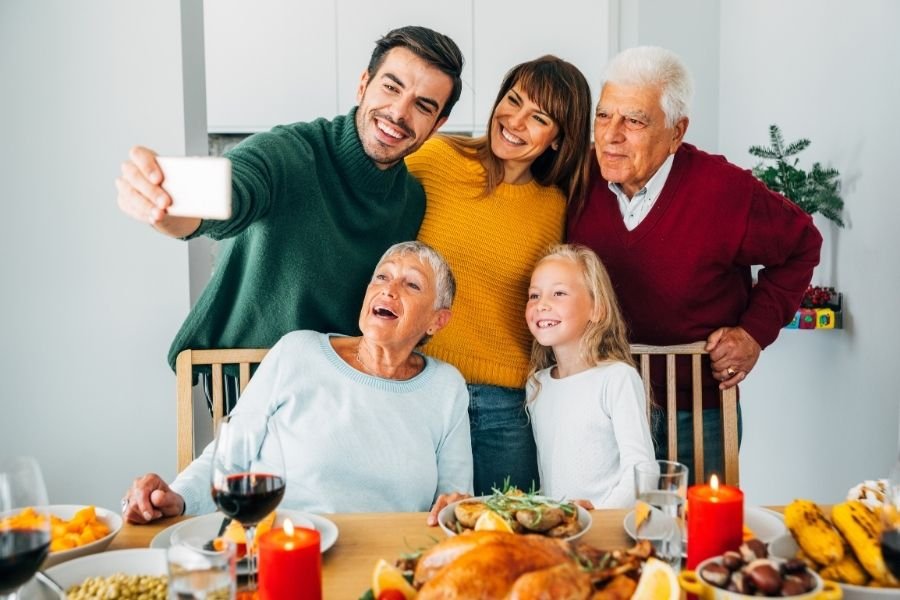
Every family has its traditions. Some are meaningful and carefully planned, while others are a little harder to explain.
Maybe your family makes the same Thanksgiving side dish every year, even though nobody particularly likes it. Maybe there's a ridiculous game that always comes out at family gatherings, or a joke that's been repeated so many times everyone knows the punchline.
These little rituals might seem insignificant, but they have a way of bringing people together. And as it turns out, there's a reason they make us so happy.
The Comfort of Familiar Traditions
There's something reassuring about knowing what to expect, especially during busy or uncertain times.
Family traditions provide a sense of consistency. Whether it's a big holiday celebration or a regular Sunday dinner, familiar routines give us something to look forward to and help us feel connected to the people around us.
Research supports this connection. A review of 50 years of research on family routines and rituals, published in the Journal of Family Psychology, found that meaningful family rituals are associated with stronger family relationships and a greater sense of belonging.
It makes sense when you think about it. The details may change from year to year, but the familiar traditions remind us that we're part of something lasting.
Why the Silly Traditions Matter, Too
Not every tradition needs a meaningful origin story. Sometimes the most memorable family rituals start by accident.
Someone burns the rolls one year, and suddenly everyone jokes about who's responsible for the bread. A spontaneous competition becomes an annual event. A funny nickname sticks around for decades. Over time, these shared experiences become part of a family's identity.
Psychologists have found that shared rituals can strengthen social bonds, helping people feel more connected through repeated experiences.
That may explain why the traditions that seem completely ridiculous to outsiders can mean so much to the people who share them. They're little reminders of the memories, humor, and history that make a family unique.
Traditions Give Us Something to Look Forward To
Part of the happiness we get from family traditions comes before they even happen. Think about the excitement you feel before preparing a favorite holiday recipe, decorating together, or planning the annual family gathering.
Anticipation can be a source of happiness in itself. Research on positive anticipation suggests that looking forward to enjoyable experiences can contribute to positive emotions.
And afterward, those same traditions give us memories to revisit, stories to retell, and moments to laugh about. In that way, a simple family ritual can bring joy long before and after the actual event.
Making Room for New Traditions
Of course, families change. Children grow up, relatives move away, and holiday gatherings don't always look the way they once did.
It's natural to miss the traditions that have changed or disappeared. But there's also something wonderful about creating new ones. Maybe that means inviting a new friend to dinner, trying a different recipe, or starting a tradition with the next generation.
The best traditions often grow naturally out of the moments we enjoy sharing. They don't need to be elaborate, expensive, or perfectly organized to become meaningful.
A Little Tradition, A Lot of Happiness
Now that the holiday season is here, it's worth appreciating the familiar moments that make our gatherings special.
The recipe that's been passed down for generations. The family stories everyone has heard a hundred times. The silly game that somehow gets more competitive every year.
These traditions help us feel connected to our past and to one another. And sometimes, the smallest rituals become the memories we treasure most.
Enjoy the traditions you love, laugh at the ones that make absolutely no sense, and maybe even start a new one. You never know which little moment will become a family favorite for years to come.
Happiness Posts is published by Darin M. Klemchuk founder of Klemchuk PLLC, an intellectual property law firm located in Dallas, Texas and co-founder of Engage Workspace for Lawyers, a coworking space for lawyers. He also publishes the Ideate (law) and Elevate (law firm culture) blogs. You can find more information about his law practice at his firm bio and also at his BioSite.
